
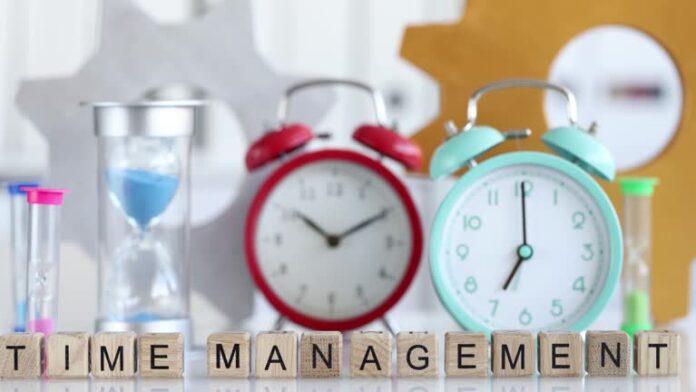

Why Time Feels Like a Myth When You’re a Student
Let’s face it — being a student between Class 9 and 12 in India is kinda like running a marathon while juggling flaming swords. You’ve got boards, unit tests, project submissions, tuition, NEET/JEE prep (if you’re in that zone), sports practice, your cousin’s wedding, random family WhatsApp drama, and somehow… you’re also expected to get 8 hours of sleep, stay healthy, and “just manage your time better.”
Lol. Sure. Because we’re all born with Excel sheets and Google Calendar pre-installed in our brains, right?
Here’s the thing though — time management doesn’t have to be some military-style discipline. You don’t need to wake up at 4 AM and drink haldi water while chanting affirmations (unless that works for you, then no judgment). You just need a few realistic, human strategies that don’t feel like punishment. Stuff that you’ll actually do, not just pretend to do.
So here it is — a very real, slightly messy but practical guide to time management strategies for Class 9–12 students. No sugarcoating, no Pinterest-planner fantasy.
Step 1: First, Know Thy Enemy (aka Where Your Time Actually Goes)
Let’s be honest.
Most of us don’t even realize how much time we waste. It starts with “just 5 minutes on Instagram” and ends with 43 reels, one online shopping wishlist, and some guy from Indore showing you how to fold a T-shirt in 2 seconds.
Try this: for one full day, write down what you did each hour. Not what you planned to do — what actually happened.
You’ll probably discover one of these:
- “Studied chemistry” = Actually spent 20 mins reading and 40 mins texting friends about how hard chemistry is.
- “Doing homework” = Looked at the page, opened Google, got distracted by cat memes.
- “Break time” = Became a 2-hour YouTube spiral featuring MrBeast, stand-up comedy, and some weird ‘shorts’ about hostel life.
It’s not about guilt. It’s about awareness. Because you can’t manage time if you don’t know where it’s leaking from.
Step 2: The “Fixed + Flexible” Schedule Trick
You’ve probably seen those crazy routines on the internet —
4:30 AM – Wake up
5:00 – Meditation
5:15 – Maths
6:00 – Yoga…
and you already feel tired reading that.
Here’s a saner version that I actually used during my board year (Class 12, CBSE, Bio stream — I survived, btw).
Fixed time slots:
Lock in the stuff that won’t change. School hours, coaching class, travel time, meals, sleep (please sleep). That’s your skeleton.
Flexible slots:
This is where you mix it up. If you’ve got 2 hours in the evening, split it like:
- 1 hour revision (rotate subjects daily)
- 30 mins practice (MCQs, diagrams, problems)
- 30 mins buffer (in case things spill over or you just wanna scream into a pillow)
The idea is to be rigid with commitments but chill with methods. Life is unpredictable, so your schedule should flex a little.
Step 3: Work With Your Brain, Not Against It
You know how some people say, “I can’t study at night”? Yeah, believe them. Your brain has preferred times. It’s not a one-size-fits-all.
If you’re a night owl, maybe 9 PM to midnight is your peak zone. If you wake up fresh, hit your hardest subjects in the morning. I used to do English and History late at night because reading stories felt like winding down. But Biology diagrams? Morning, or I’d draw mitochondria as potatoes.
Also, use the Pomodoro Technique. Sounds fancy, but it’s simple:
- 25 mins of focused study
- 5 min break
(Repeat 4 times, then take a longer break)
Set a timer, use a phone app, or get a kitchen timer if you’re old school. It works, mostly because your brain loves short sprints more than marathons.
Step 4: To-Do Lists That Don’t Make You Cry
Traditional to-do lists are kind of evil. They look productive but end up just making you feel guilty for not ticking everything off.
Here’s a hack:
- Make 3 columns: Must Do, Should Do, and Nice to Do
Put the bare minimum in “Must.” Like, if you do just those today, you won.
Example:
- Must Do: Revise Class 10 science ch.5, solve 10 math Qs
- Should Do: Make flashcards, update notes
- Nice to Do: Watch 1 crash course video on YT
This way, even if the day goes sideways (it often will), you’re still on track. Also, crossing stuff off? Extremely satisfying. Like popping bubble wrap.
Step 5: The “80/20” Rule — For Lazy Geniuses
This is my favorite. It says 80% of your results come from 20% of your efforts. So instead of drowning in everything, find the high-value stuff.
Examples:
- Instead of rereading the whole chapter, solve last 5 years’ questions. That’s what the exam will ask.
- Instead of copying notes word-for-word, summarize in your own language. Your brain remembers you better than textbooks.
- Instead of 3 hours of “studying” while scrolling reels, do 1 focused hour without distractions.
Smart work > hard work, always.
Step 6: Use Tech (But Don’t Let It Use You)
Phones are double-edged swords. Amazing for resources, terrible for distractions.
Use these guilt-free:
- Notion or Trello for planning
- Google Calendar for reminders
- Forest App — it grows a tree when you focus (weirdly motivating)
- YouTube playlists – channels like Unacademy, Magnet Brains, or ExamFear for quick concepts
But also… uninstall that one game. You know the one.
And maybe, just maybe — turn off Insta notifications during exams. I promise that DM from your crush can wait. Or at least, that weird ad about online poker.
Step 7: Fun Is Not the Enemy
If your schedule doesn’t have time for fun, you’re gonna crash. Guaranteed.
Whether it’s a 15-minute cricket match, dancing alone to Bollywood songs, playing guitar badly, or just lying on the floor overthinking life — make time for it. Your brain isn’t a machine.
In fact, giving yourself permission to relax makes your focus better when it’s study time. So yes, watch that sitcom episode guilt-free. Just maybe not the whole season. (Unless you’re done with your “Must Do” list
Step 8: Time Management ≠ Hustle 24/7
A lot of people confuse “time management” with “never resting.” That’s toxic.
Real time management is about:
- Doing what matters first
- Letting go of guilt when things go off-track
- Making slow, steady progress
- Not comparing your journey to that one topper kid who claims they study 14 hours/day (no they don’t, trust me)
And if you’re still figuring it out? That’s okay. Most adults haven’t mastered this either. The goal isn’t perfection — it’s progress.
Real Talk: My Time Management Was Trash (But It Got Better)
I used to spend HOURS “organizing my desk” or “making the perfect timetable” instead of actually studying. Once, I color-coded my entire syllabus for 3 subjects and then had a panic attack because I forgot I had a test next day.
But gradually, I figured out:
- I’m more productive at night
- Flashcards help me remember weird facts (like osmosis or historical dates)
- Taking small breaks made me less tired, not more
You’ll figure your own quirks too. Trial and error is part of it.
Final Thoughts: You’re Not Lazy, You’re Just Human
Time management is not about becoming a robot. It’s about being kinder to yourself while also getting stuff done. Some days you’ll crush it. Other days you’ll binge-eat Maggi and cry over math formulas. Both are valid.
Just don’t give up. Keep adjusting. Celebrate small wins. And remember — you’re doing the best you can, and that’s more than enough.